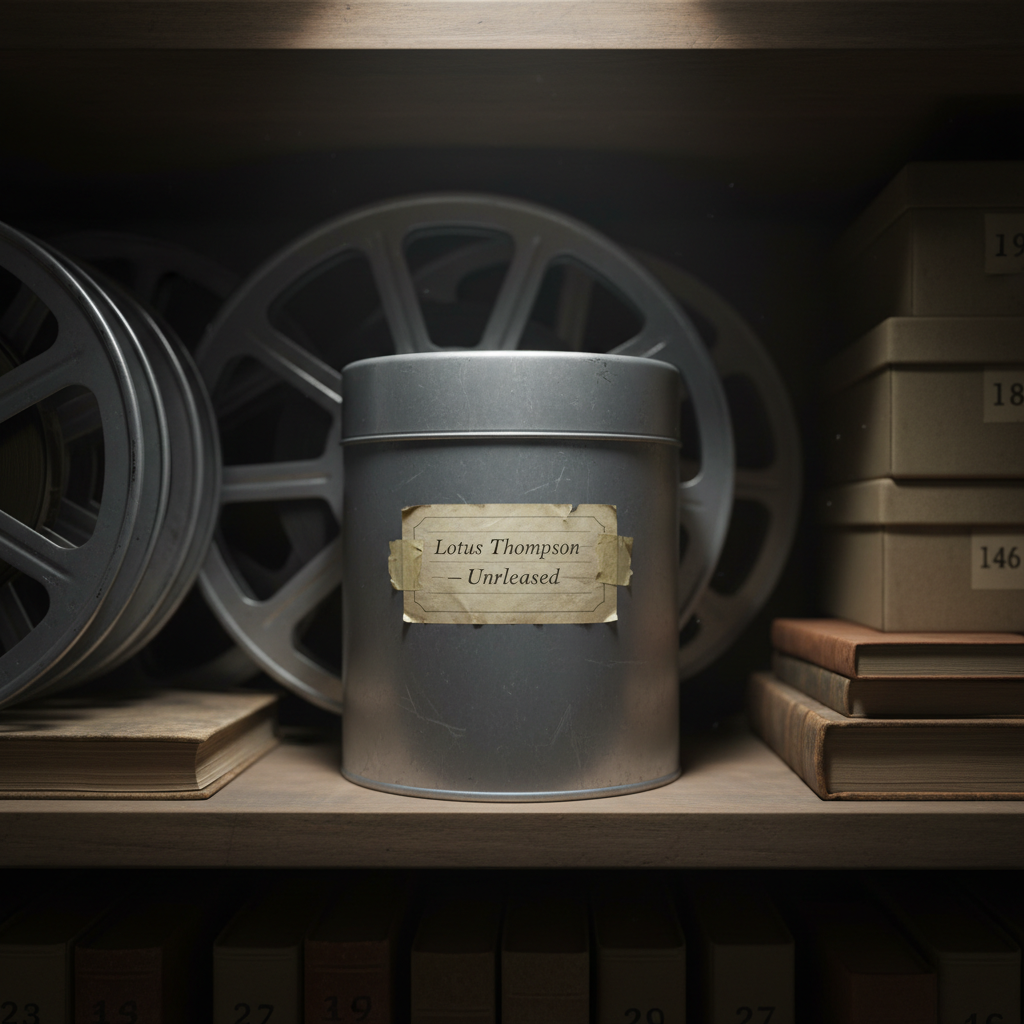
A close-up, photographic realism shot of a meticulously preserved silent film canister labeled “Lotus Thompson – Unreleased” resting inside a shadowy archival vault shelf. The canister is brushed metal with faint scratches, its old paper label browned at the edges and secured with brittle, yellowing tape. Surrounding it are other unmarked reels, fading ledger books, and numbered storage boxes, all arranged in tight, orderly rows that vanish into darkness. Cool, focused overhead archival lighting creates strong contrasts, picking out textures on metal and paper while leaving the background in soft blur. Composed at eye level with a shallow depth of field, the mood is secretive, reverent, and investigative, suggesting a long-hidden story about to be brought back to light.

Lotus on Film

Context, credits, and condition reports that illuminate every Lotus Thompson film, from Sydney shorts to Hollywood.
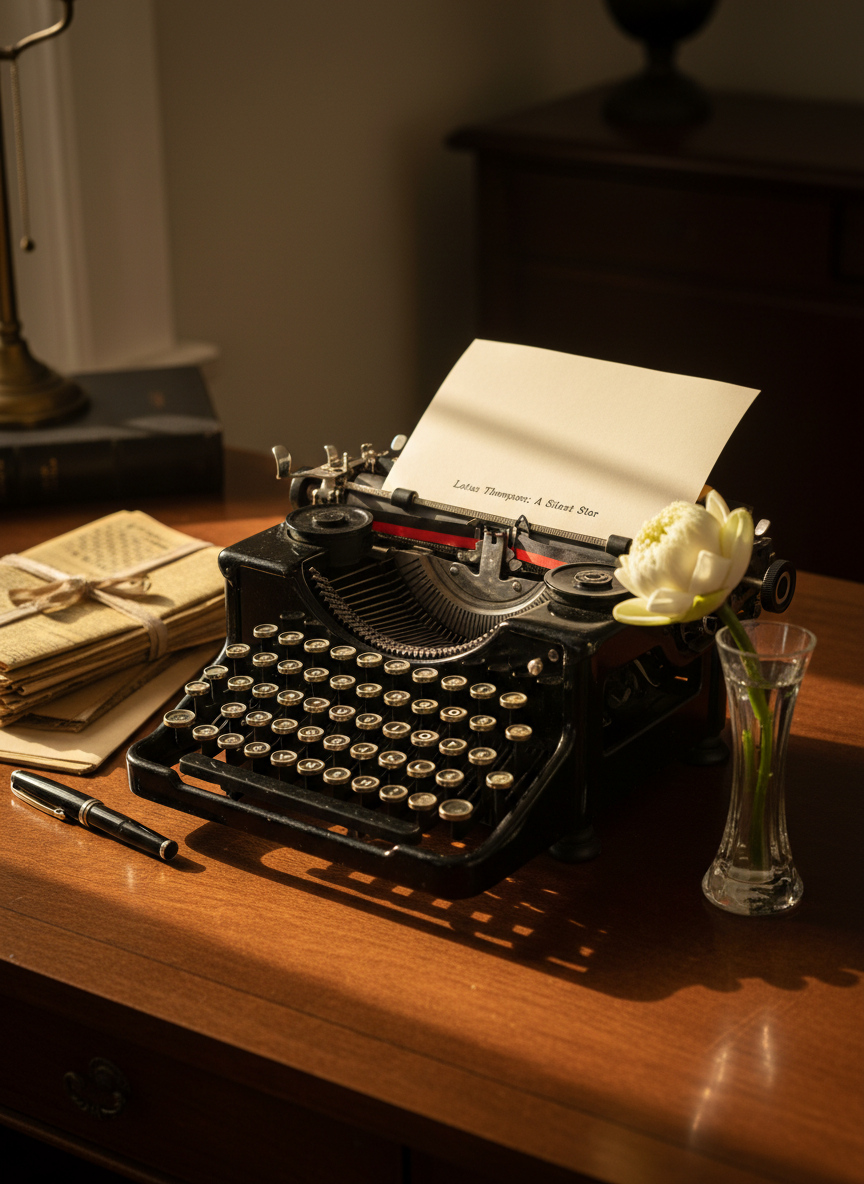
An antique black enamel typewriter with round glass-topped keys sits on a refined, dark oak desk, evoking 1920s Hollywood offices, in richly detailed photographic realism. A half-typed page titled “Lotus Thompson: A Silent Star” is rolled into the carriage, edges slightly curled. Around it, there are neatly stacked yellowing clippings, a fountain pen, and a single white lotus blossom in a slim crystal vase. Warm golden hour light pours through an unseen window, casting long, elegant shadows and subtle reflections on the typewriter’s metal parts. Framed at a three-quarter angle with shallow depth of field, the mood is sophisticated, intimate, and scholarly, suggesting a biographer carefully reconstructing a lost life.
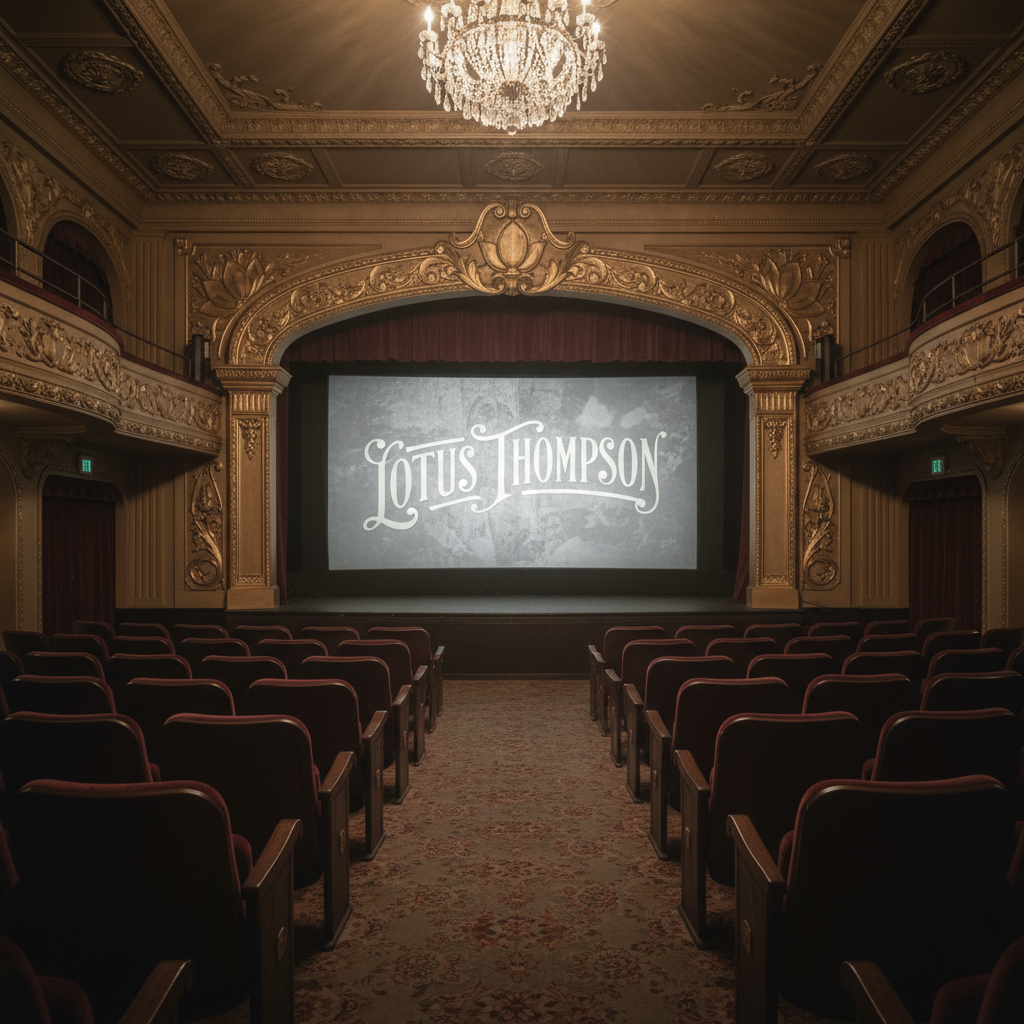
A dimly lit silent-era cinema interior rendered in photographic realism, focused entirely on architectural details rather than patrons. Plush, deep red velvet seats recede in elegant rows toward an ornate proscenium arch framed with gilded flourishes and stylized lotus motifs. The large screen glows softly with a monochrome title card reading “LOTUS THOMPSON” in decorative 1920s lettering, against a subtly grainy background. Overhead, a crystal chandelier is partially illuminated, sending delicate reflections across the ceiling. The scene is captured from the back of the theater with a slightly elevated angle, keeping the space empty and reverent. The lighting is atmospheric and nostalgic, creating a hushed, sophisticated mood of rediscovery.
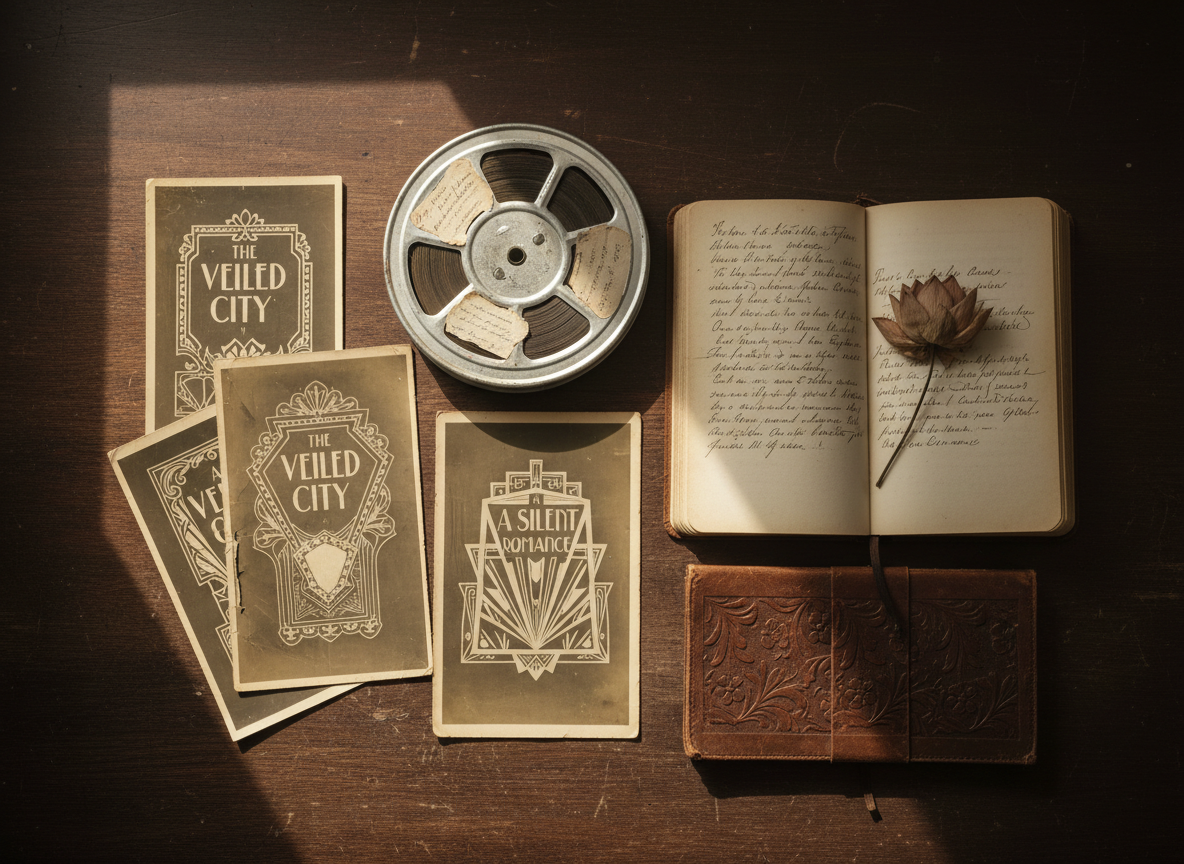
A meticulously arranged flat lay of 1920s silent film memorabilia on a dark, slightly scuffed wooden table, captured in photographic realism. At the center rests a vintage metal film reel with worn paper labels, beside a stack of sepia-toned production stills featuring ornate Art Deco title cards, never any faces. A leather-bound notebook lies open, filled with elegant, looping handwriting and a pressed lotus flower. Soft, diffused afternoon light falls from the left, creating gentle shadows and a contemplative mood. Shot from a bird’s-eye view with sharp focus across the frame, the composition feels sophisticated and archival, evoking careful research into a forgotten Hollywood story.

Filmography

Discover Lotus Thompson’s complete screen journey, with plot summaries, cast and crew credits, studio histories, and preservation notes tracing which films survive, which are fragmentary, and which are tragically lost to time.
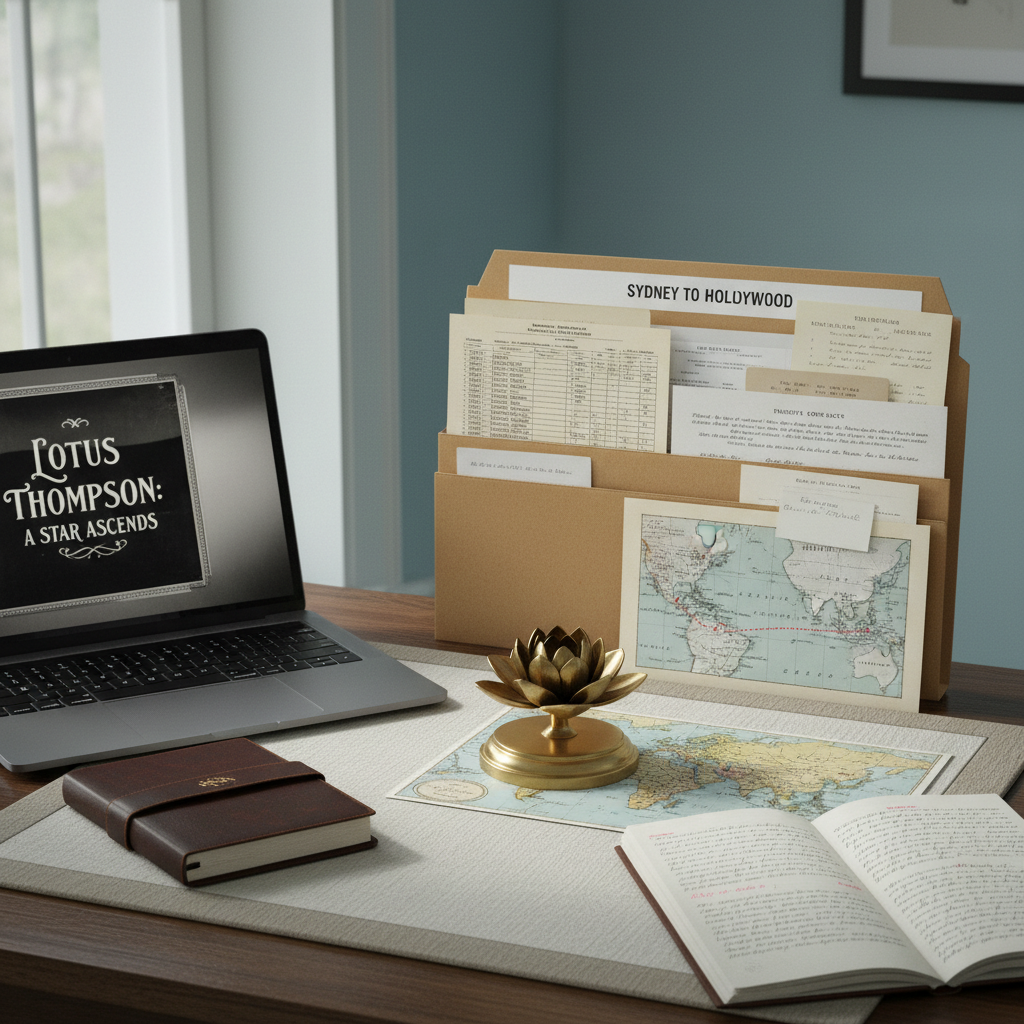
A refined writing desk vignette in photographic realism, dedicated to Lotus Thompson research. On a pale linen blotter lies an open archival folder labeled “Sydney to Hollywood,” filled with carefully organized facsimiles of ship manifests, studio contracts, and telegrams, none displaying personal portraits. A small map of the Pacific route is pinned beneath a brass paperweight shaped like a lotus flower. To one side, a laptop screen shows a monochrome intertitle frame from a silent film, while a leather-bound journal sits open with neatly written notes. Soft, cool daylight from a nearby window washes the scene, creating gentle, intellectual calm. Shot from a slightly elevated angle with balanced composition, the mood is sophisticated, methodical, and deeply archival.

Essays