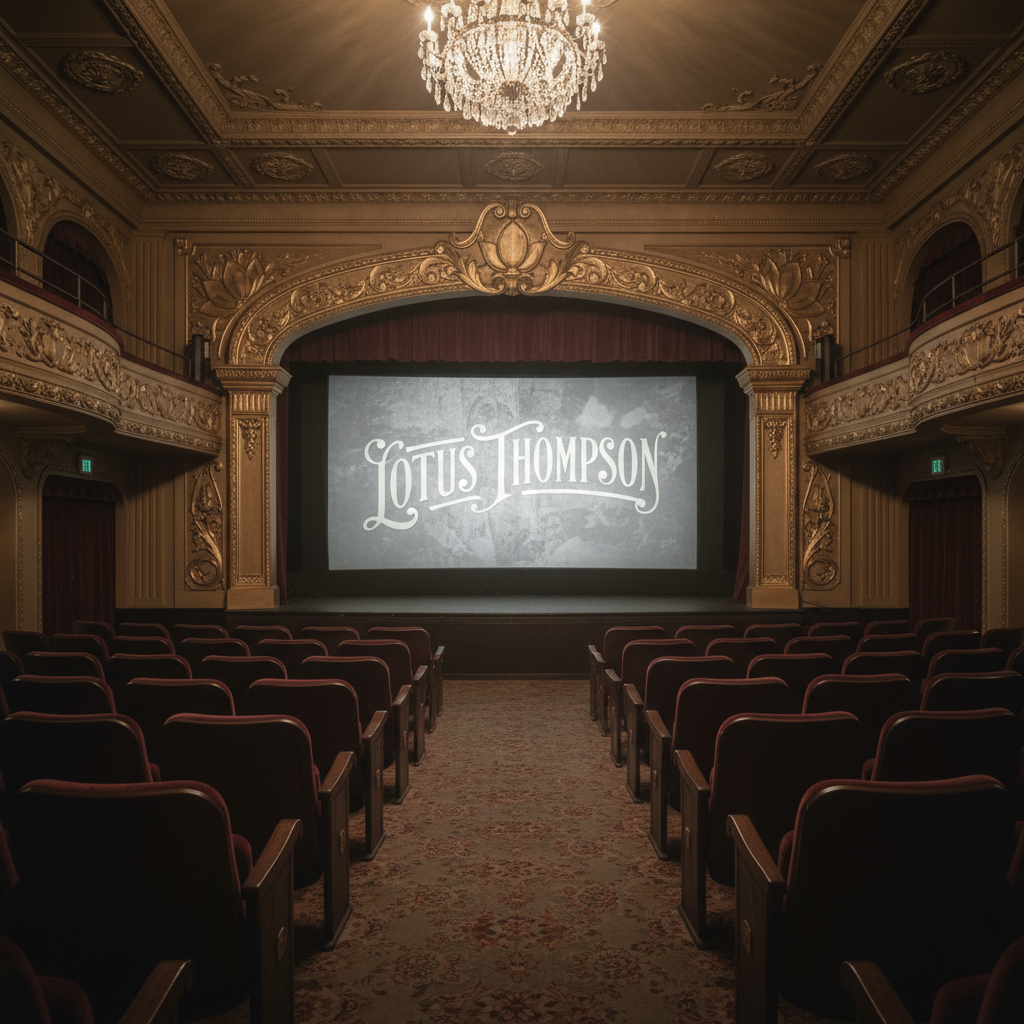
A dimly lit silent-era cinema interior rendered in photographic realism, focused entirely on architectural details rather than patrons. Plush, deep red velvet seats recede in elegant rows toward an ornate proscenium arch framed with gilded flourishes and stylized lotus motifs. The large screen glows softly with a monochrome title card reading “LOTUS THOMPSON” in decorative 1920s lettering, against a subtly grainy background. Overhead, a crystal chandelier is partially illuminated, sending delicate reflections across the ceiling. The scene is captured from the back of the theater with a slightly elevated angle, keeping the space empty and reverent. The lighting is atmospheric and nostalgic, creating a hushed, sophisticated mood of rediscovery.

Research Notes

How this biography was built from scattered records, contested memories, and fragile film fragments.

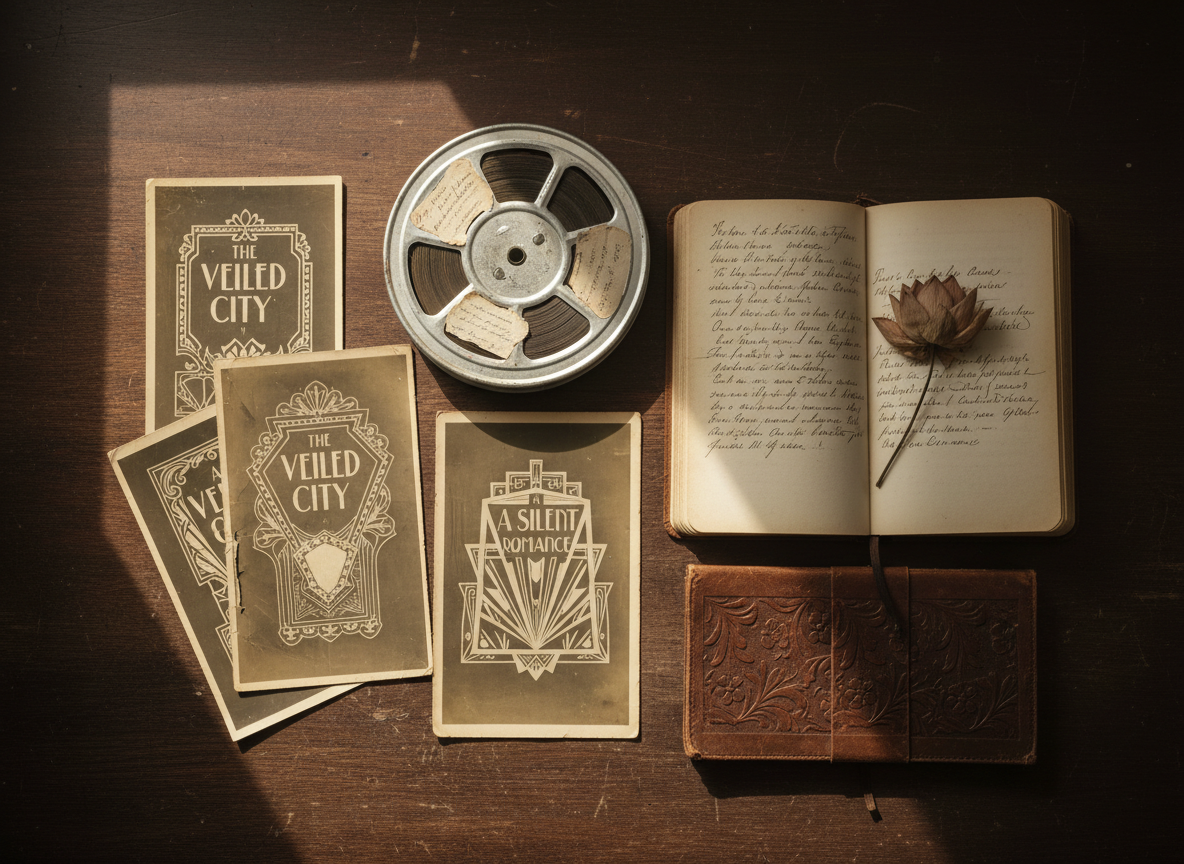
A meticulously arranged flat lay of 1920s silent film memorabilia on a dark, slightly scuffed wooden table, captured in photographic realism. At the center rests a vintage metal film reel with worn paper labels, beside a stack of sepia-toned production stills featuring ornate Art Deco title cards, never any faces. A leather-bound notebook lies open, filled with elegant, looping handwriting and a pressed lotus flower. Soft, diffused afternoon light falls from the left, creating gentle shadows and a contemplative mood. Shot from a bird’s-eye view with sharp focus across the frame, the composition feels sophisticated and archival, evoking careful research into a forgotten Hollywood story.

Sources

This project weaves studio ledgers, shipping records, censorship files, fan magazines, family letters, and interviews, carefully cross‑checked and dated, while openly noting contradictions, missing reels, and evolving interpretations as new archives emerge.