Don’t Go To Hollywood
‘It is more than expected to find that very pretty girls, destitute of any genius for acting, fall into white slave nets through this craze every year.’
The Truth, 10 November, 1923
Out of whispers, gossip, newspapers, and films, the film waif emerged as the motion picture industry in Hollywood began to grow.
It was true that girls without money or prospects were flocking to the city, and the industry responded to the problem by making films about film waifs, terrorising and thrilling audiences with the fallen woman, an archetype dating back to Eve and biblical times.
The fallen or corrupted woman as an archetype was inspired and exploited by Hollywood, continuing into the 1970s as popular culture became fixated on the dark and malignant forces of the supernatural with stories of demonic influence. Films like The Exorcist (1973) and Carrie (1976) seared themselves into the public imagination and spoke directly to deep cultural anxieties of the time.
‘Satanic Panic’ gripped much of the Western world into the 1980s. Parents, churches, and media outlets became convinced that Satanic cults were preying on young people. This panic grew out of broader cultural fears, above all, the spread of drugs. In this climate, drugs and evil became intertwined in the public imagination and urban legends spread rapidly.
One particularly frightening myth for parents was the claim that young women—especially teenage girls—were being injected with heroin by strangers in darkened movie theatres. The urban myth usually described a girl, sitting next to the aisle would feel a “pinprick” while watching a film, only to later discover she had been dosed with heroin, and had fallen into white slavery and prostitution.
Returning from Hollywood in 1923, Edwin Geach of Union Theatres, Australia, spoke to the Sunday Times and had a stark message for screen-struck young women in the country: don’t go! Hollywood, he said, was ‘the Mecca of their dreams. After that comes disillusionment, and, frequently, ruin…Hollywood is simply teeming with beautiful girls, from all parts of the world, hoping against hope for an opening.’
Not unlike the Goldrush days, California was becoming overrun with desperation, the situation became so bad that the Studio Club began raising funds to build a YWCA to rescue film-struck, stranded girls.
Christian groups, in particular, were concerned that the pictures were doing Satanic work among youth leading to the widespread corruption of innocence. Geach revealed that a committee, headed by William Hays of the Motion Pictures and Producers of America, was raising money to assist impoverished itinerant film aspirants who were unable to pay for their fare back home.
Hays declared that these fallen girls ‘would give all they ever possessed to be back home washing up the dishes for mother.’
At the same time, The Truth (WA) made the point that Australian newspapers should not encourage the movie-struck girl with inane competitions for movie beauties, girls with beautiful legs, and flappers with the prettiest foot. Hundreds of girls, they write, have been kidded, but it wasn’t just girls – it was estimated by that two-thirds of newcomers to the city were boys, hoping to become the next Chaplin or Valentino. For whatever reason, the plight of stranded boys in Hollywood or their immortal souls never stirred the same fascination or pity as that of stranded girls.
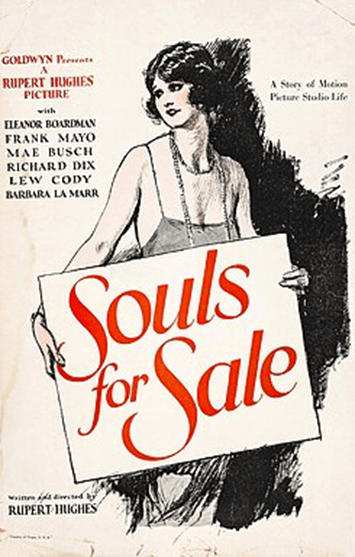
Souls for Sale warned young people who dreamt of stardom that their souls were just a drug on the market. It featured an all-star cast just to rub it in, a host of popular performers and favourites of the screen.
It was ‘a red book serial novel of motion picture life in Hollywood’ and it exaggerated what it took to be an actress – I hope.
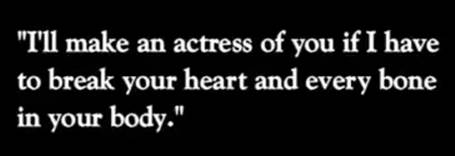
Even as it promised the real story of movie life, with the pleasures, the risks, and the dangers of Shadowland, it still loomed glamorously. Patrons watching Souls for Sale were entertained during intermission by the Mack Sennett Bathing Girls – Australia’s own. Nobody, not even Australians could escape the lure of Hollywood.
In The Screen– Struck Girl, Liz Conor points out ads in the papers at the time, offering a young hopeful a chance to win a three month movie contract with Universal Studios and a first class passage to the United States through Ashby Acting School, one of many talent studios that appeared overnight, taking advantage of talentless deluded dreamers.
Conor explores the tension between two archetypes in early Hollywood—the naïve starlet and the new woman—revealing how these contrasting figures shaped the industry’s view of femininity and agency. The naïve starlet is a tragic figure: manipulated, deceived, and consumed by the illusion of fame. In contrast, the new woman emerges as ambitious, deliberate, and self–directed. She travels to Hollywood with the express intent of shaping her own destiny through the rapidly evolving medium of film.
Back in Australia, movie-struck girls were warned. In August, 1923, there were more than 10,000 registered at motion picture studios as extras in Hollywood. They were reminded that the majority of girls there found very little work of any kind, they often ran out of money, and starved.
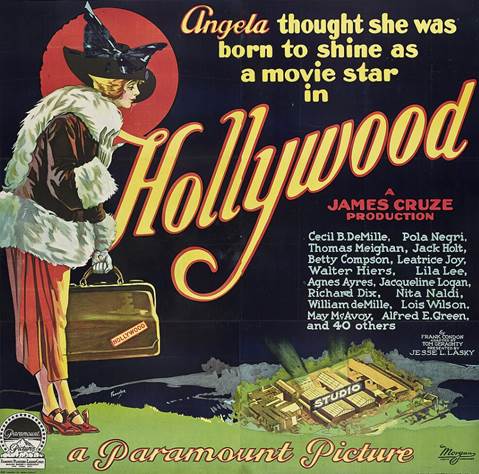
A film called Hollywood was released that same year. It had thirty stars and twenty screen celebrities, including Pola Negri and Cecil B DeMille. It was described as ‘a swift moving story of a movie– struck girl who tried to climb the throne of success – a gripping, throbbing, irresistibly human story.’
It was another cautionary tale that attempted to prevent young women from heading to Los Angeles but, at the same time, encouraging them, by sprinkling the film with as many big stars as they could fit into it.
In November, 1923, Lotus had read all the stories – she was surrounded by the gossip and anecdotes as she planned her trip overseas, and saw local and international films about all of the evils of Hollywood. It came from every angle, but still, she ignored it.
Because there were no rewards without risks.
 Lotus Thompson: Silent Film Star
Leave a comment