‘Lotus Thompson, who arrived here from Australia some time ago and was taken in hand at the Roach Studios, has left our management and is freelancing around the different studios.’
This was to be a recurring theme for Lotus – there were many exits and entrances, and many risks but not always rewards. Independent freelancing was precarious but it was freedom.
‘She is at present with the Fox outfit on location at Santa Cruz, with an English director named Maurice Elvy.’
That was the carefully worded official Hal Roach Studio press release – an explanation for the departure of Lotus Thompson. Trouble was that it was published on January 21st, 1925, and the film had already been released in December, the year before.
Folly of Vanity was Lotus Thompson’s debut into American cinema. Her character was ‘blonde gold digger’ but she had arrived.
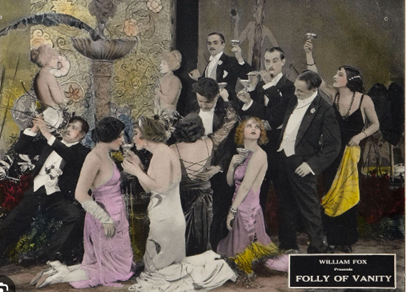
The film unfolds in fragments: a decadent party scene, a drifting dream, and an underwater fantasy. In the fantasy, semi-naked mermaids dive off cliffs into shimmering seas and attend Neptune, King of the Sea, in his underwater realm.
Critics were divided – some said it was spectacle at best, a stupid sex film at worst – but the film reveals something essential about the era, even Hollywood itself: a fascination with beauty, temptation, and moral collapse.
The storyline is, admittedly, thin – it focuses on a newly married couple and a rogue pearl dealer. Billie Dove embodies the innocent young wife—fragile, watchful—her moral certainty slowly eroded as she is engulfed by a world of brazen sexuality and relentless greed.
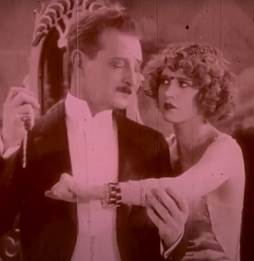
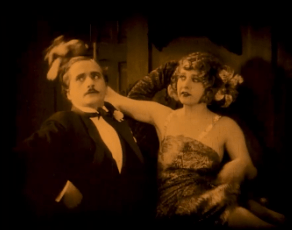
John St Polis and Lotus Thompson
Lotus, the gold digger, received a generous amount of screen time, and reports in the press suggested she had succeeded in getting into the film game.
The Australian review placed her in the same sphere as better-known actresses. It claimed she was co-starring with Billy Dove and Betty Blythe, which wasn’t strictly true.
Featured standing on a table, laughing and waving madly, the gold digger is part of an extended dance scene as couples weave around the room in circles. In the last scene at the end of the film, she is caught kissing someone’s husband. They stop kissing only when Betty Blythe’s character interrupts them, passing by with a look of derision. The couple then break away from one another with grimaces and shame.
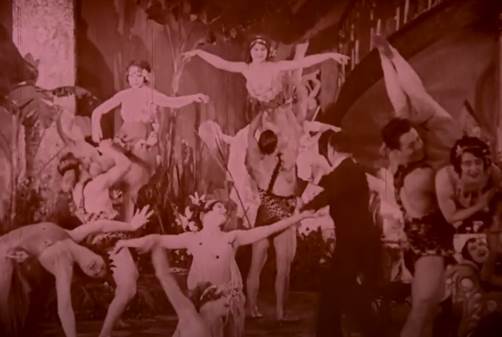
Folly of Vanity, 1924: A debauched party scene
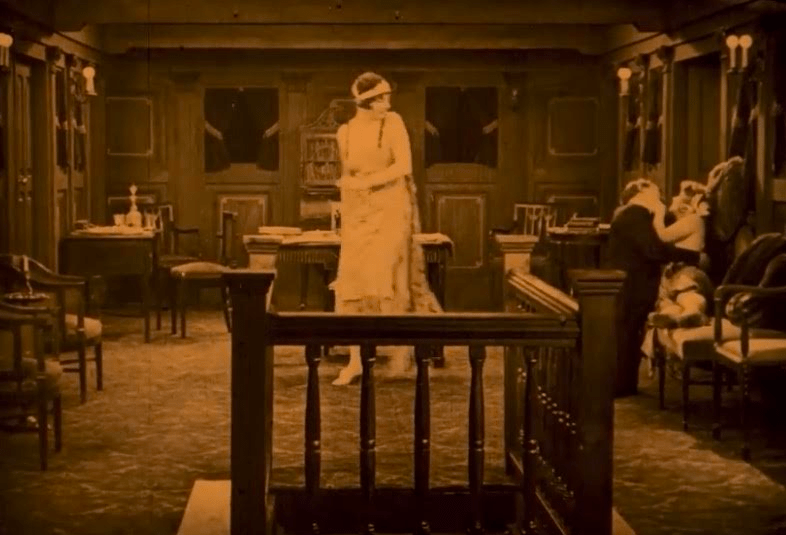
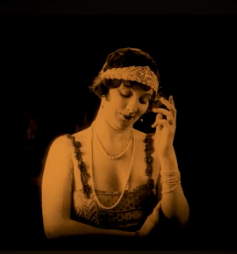
Betty Blythe is bemused.
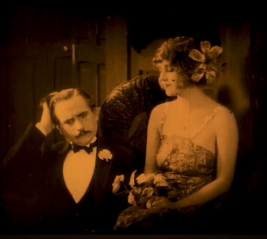
In The Folly of Vanity Lotus represented the lighter, brighter, material girl conceived for celluloid, while vivacious Ena Gregory played a siren in the fantasy sequence, but they had a lot in common.
Both were blonde, Australian, and reluctant comediennes, desperate for a decent dramatic role. They were extremely competitive, vying for best posture, position in shots, and most agile body.
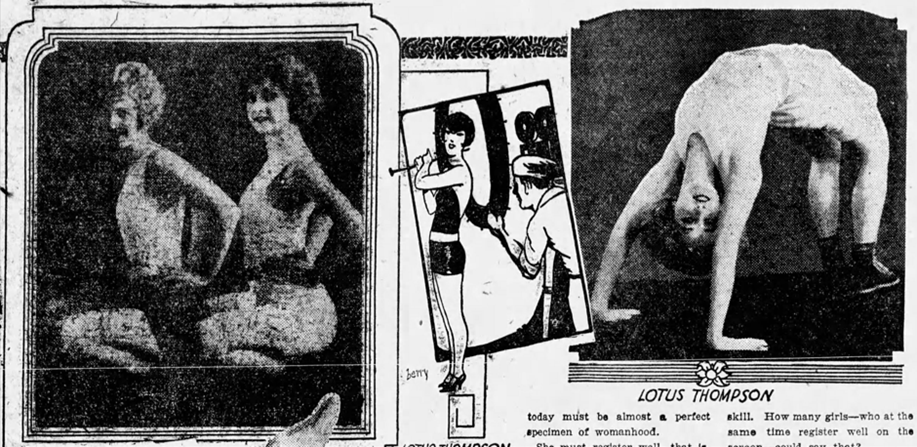
Ena Gregory, left: ‘My name won’t look such an eyeful as yours in electrics.’
Photographs at the studios reveal a distance between the two that mirrored real life. One day, Ena and Lotus had an argument about they way their names would look ‘in electrics’. Actors were superstitious about their names and used numerology to find lucky stage names.
Ena Gregory changed her name to Marion Davies but described the road to stardom as long and hard. Once she was severely burned in a production but before that she was in Short Kilt (1924) with Stan Laurel, of the Laurel and Hardy duo.
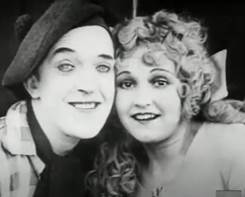
Like Lotus, she didn’t want comedy parts or chorus girl roles but there wasn’t much else on offer. It was a volatile mix of frustration and rivalry among girls, each one chasing the same fragile dream of stardom.
Why were women always chasing the starring role – couldn’t they be involved in production, directing, writing, designing or editing? These girls had arrived a decade too late. Read more about Carl Lammle’s Universal Studios, a shangri-la for women in film, a manless Eden. Coming soon!
 Lotus Thompson: Silent Film Star
Leave a comment